Live commerce: the human touch eBay Live brings back to e-commerce
From Shine Software’s experience at e-Commerce Berlin to the interview with Dr. Lara Day (Head of eBay Live Germany): why live shopping brings expertise, stories and community back into online buying.

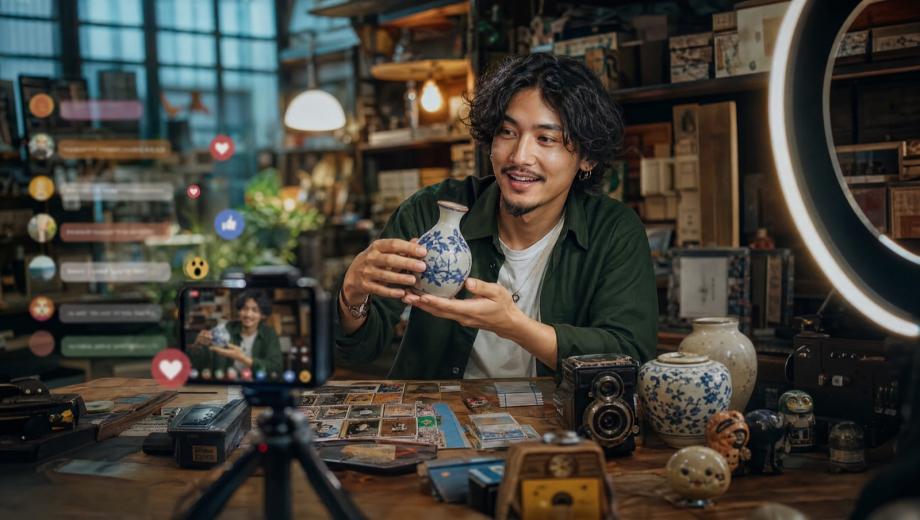
Last year the Shine Software team sat in the audience at e-Commerce Berlin, one of Europe's most hands-on digital commerce events: two days of stages, booths and corridors full of merchants, platforms and people who sell for a living. If we had to summarise what we brought home in a single sentence, it would be this: the future of e-commerce is not more automated, it is more human. A year later, an interview published on the eCommerce Germany blog — the Behind the Click podcast episode with Dr. Lara Day, Head of eBay Live Germany — gave us the right vocabulary to say it better than we could ourselves.
In this article we start from that Berlin experience and from the ideas in the episode to understand what live commerce really is, why eBay is investing in it in Germany, and what it can teach anyone selling online in Italy and across Europe.
Berlin left us with one idea: e-commerce needs people
At e-Commerce Berlin the talks covered everything: platforms, payments, logistics, artificial intelligence. But the conversations we remember best were not about tools — they were about people. Merchants presenting their products on camera, communities born around a niche, sellers who became reference points for their customers. The common thread was always the same: relationship beats transaction.
That is exactly Dr. Lara Day's thesis in the interview: live commerce is not "just another sales channel", it is the way expertise, storytelling, community and human interaction come back into a buying journey that relentless optimisation had emptied. When everything becomes a frictionless click, the moment someone looks into the camera and explains an object becomes a luxury — and a competitive advantage.
What live commerce is (and where eBay Live fits in)
Live commerce is simple to describe and hard to tell: a seller shows products in a live video stream, viewers ask questions in the chat, items are bought during the show. On eBay Live — eBay's live shopping format, active in Germany and led by Lara Day herself — this is exactly what happens: streams, chat, real-time auctions and a community that recognises itself and comes back.
The difference from a product page is all here: the customer can react, ask questions, influence what happens on stream. They are not browsing a catalogue: they are attending an event.
From the auction room to the smartphone: expertise, stories, community
Before leading eBay Live Germany, Lara Day worked in the art and luxury collectibles world, with a PhD in art and architectural history. A background that looks distant from e-commerce, and is instead perfectly consistent: her whole career revolves around the relationship between people, objects, expertise and stories.
Traditional auction houses work because they combine four ingredients: an object, a story, an expert and an audience. Live shopping brings those same ingredients onto a screen. Viewers see the product up close, hear the story behind it, ask questions and get answers in real time. And the atmosphere of the room — that gentle tension between people competing for a piece — moves into the chat: regular viewers greet each other, sellers welcome returning customers, people request products, the community celebrates whoever wins an item.
"It feels like people are in the same room even though it's a virtual space." — Dr. Lara Day
"The driving force really is this expertise and the willingness to engage with the people who are in your show." — Dr. Lara Day
Not just collectibles: second-hand, vintage and products that need explaining
Collectibles — trading cards, fashion, ceramics — are the natural starting point for live commerce, because passionate communities already exist around them. But Lara Day is clear: the format must not remain their prisoner. Live shopping shines with products that need explanation too:
- Second-hand and vintage: on stream you can show scratches, marks and real condition — the details a static photo never truly tells;
- New and technical products: features get demonstrated, doubts get answered, customers get guided through their research;
- Considered purchases: instead of comparing ten spec sheets in ten tabs, you ask direct questions to someone who knows the product.
It is purchase research turning into conversation. For anyone selling refurbished or niche goods, it is a small revolution.
Authenticity beats a perfect studio
The objection we hear most often from merchants is: "we are not made for camera". Lara Day's answer is reassuring and counter-intuitive: you do not need a television studio. No perfect lighting, no millimetric script. Some sellers produce polished shows; others walk through their warehouse with a phone in hand, showing what just arrived. The two ingredients shared by the streams that work are authenticity and expertise.
There is no single formula: some prepare a fixed sequence of products, others let the audience drive the show — even leaving the stream for a moment to fetch an item requested in the chat. The format adapts to the seller, not the other way around.
How to start: three concrete steps
Three practical pieces of advice emerge from the interview for anyone willing to try live commerce:
- Onboarding and test streams. On eBay Live you start with a guided onboarding and a few test streams with the team, to get the technical basics right. Then you look for your own "sweet spots": inventory, pace, time of day.
- Consistency. A single stream can go extremely well or feel uncomfortable: it means nothing. eBay observed that sellers who go live regularly on the same days build their community faster, because viewers know when to find them.
- Know your own style. Some sellers handle chat, products and packing all at once; others work better as a pair, with one person watching the chat. There is no right way: there is yours.
Germany, Europe and AI: the human touch as an advantage
The German live commerce market is still taking shape: there is an educational component, because the format sounds more complicated when described than when experienced. Watching one stream is enough — seeing the product, talking to the seller, asking a question — to get it. And above all: live commerce cannot be copied from one country to another. Germany, the UK and the US have different shopping habits; the interesting question is not whether live shopping will grow in Europe, but what European shape it will take.
And what about artificial intelligence? Lara Day sees clear value in AI for operational tasks — creating listings, removing manual work — but she is firm on one point: the more transactions become invisible and frictionless, the more live shopping deliberately reintroduces time, attention and relationship into the act of buying. Not every purchase needs to become a live experience: the ones that deserve it are the products we genuinely care about and want to understand. It is the same reason why, in Berlin, live demos and booths with real people outshone the screen-only stands.
What it means for anyone selling online in Italy
Live commerce does not replace your e-commerce: it completes it. You still need a solid base — a curated catalogue, clear product pages, frictionless checkout, decent performance — because the stream brings traffic and trust, but it is the store that converts and retains. It is the lesson we have been repeating since e-Commerce Berlin: technology buys efficiency, people buy relationships. Whoever keeps the two together — automation where it serves, face and expertise where it matters — will hold an advantage that is hard to copy.
If you want to understand how your catalogue could live in a live format too, or simply want an e-commerce that can withstand traffic, streams and community, the starting point is always the same: a well-built, tailor-made platform.
Let's talk about it over a stream (or a coffee)
Tell us about your project: we will honestly tell you whether and how live commerce can enter your strategy, and what your store needs to support it. Talk to us about your project or discover our tailor-made e-commerce solutions. And if you are also considering an app to put your streams in your customers' pockets, read our guide on how much a native mobile app costs in 2026.
Sources and further reading: the original article "Behind the Click Podcast with Dr. Lara Day" on eCommerce Germany (16.09.2026); the podcast episode on Spotify and Apple Podcasts; a deep dive on live shopping in the DACH region.
Founder di Shine Software. Da oltre 12 anni progetta e sviluppa e-commerce Magento con AI integrata, hosting gestito e soluzioni su misura per le PMI italiane ed estere.